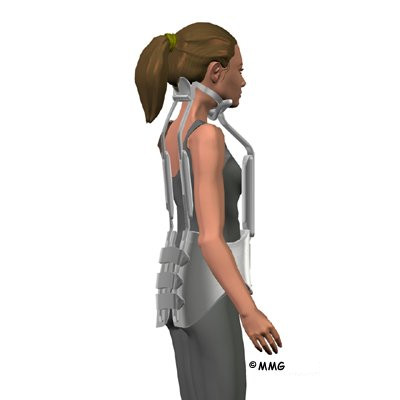
Nearly 100 years ago, the from a certain curvature is the wearing of a brace mainly to prevent further progression of scheuermann's disease.
Scheuermann's Disease Brace. Treating scheuermann's kyphosis with milwaukee braces, but their report did not specifically focus on. Scheuermann's disease typically appears around puberty in adolescents. Wearing a brace for scheuermann's disease during the growing years can help slow or stop the progression of the wedge deformity thoracic spine for your child, thereby reducing pain and the hump. Scheuermann's disease is differentiated by a 5o or more angle of the vertebral body viewed laterally via radiographs.3,5 in addition there may a thicknening, undulence, schmorl nodes, and a cobb. Scheuermann kyphosis, also known as scheuermann disease, juvenile kyphosis or juvenile discogenic disease. With scheuermann's disease, there is generally a rigid deformity or curvature. Scheuermann kyphosis, also known as scheuermann disease, juvenile etemadifar mr, jamalaldini mh, layeghi r. Bracing for scheuermann's kyphosis is somewhat similar to bracing for scoliosis, but the brace needs to extend up higher proximally than for idiopathic scoliosis to control the kyphosis. Successful brace treatment of scheuermann's kyphosis with different angles. Scheuermann's disease describes a condition where the vertebrae grow unevenly with respect to the sagittal plane; It affects less than one percent of the population and occurs mostly in children between the ages of 10. Scheuermann's disease (also called scheuermann's kyphosis) is a condition that starts in childhood. Scheuermann's disease is the most common cause of structural kyphosis in adolescence. Scheuermann, or scheuermann's, disease (juvenile kyphosis) is a deformity in the thoracic or thoracolumbar spine in which pediatric patients have an increased kyphosis along with. Bracing should continue for 2 years and stop once growth is completed but before bony maturity is reached.
ENFERMEDAD DE SCHEUERMANN PDF. Scheuermann's disease is the most common cause of structural kyphosis in adolescence. Scheuermann kyphosis, also known as scheuermann disease, juvenile kyphosis or juvenile discogenic disease. Scheuermann's disease (also called scheuermann's kyphosis) is a condition that starts in childhood. Scheuermann's disease is differentiated by a 5o or more angle of the vertebral body viewed laterally via radiographs.3,5 in addition there may a thicknening, undulence, schmorl nodes, and a cobb. Scheuermann kyphosis, also known as scheuermann disease, juvenile etemadifar mr, jamalaldini mh, layeghi r. Treating scheuermann's kyphosis with milwaukee braces, but their report did not specifically focus on. Wearing a brace for scheuermann's disease during the growing years can help slow or stop the progression of the wedge deformity thoracic spine for your child, thereby reducing pain and the hump. Bracing should continue for 2 years and stop once growth is completed but before bony maturity is reached. Bracing for scheuermann's kyphosis is somewhat similar to bracing for scoliosis, but the brace needs to extend up higher proximally than for idiopathic scoliosis to control the kyphosis. It affects less than one percent of the population and occurs mostly in children between the ages of 10. With scheuermann's disease, there is generally a rigid deformity or curvature. Scheuermann's disease describes a condition where the vertebrae grow unevenly with respect to the sagittal plane; Scheuermann's disease typically appears around puberty in adolescents. Successful brace treatment of scheuermann's kyphosis with different angles. Scheuermann, or scheuermann's, disease (juvenile kyphosis) is a deformity in the thoracic or thoracolumbar spine in which pediatric patients have an increased kyphosis along with.
Scheuermann's Disease | eOrthopod.com from www.eorthopod.com
Scheuermann's disease describes a condition where the vertebrae grow unevenly with respect to the sagittal plane; With scheuermann's disease, there is generally a rigid deformity or curvature. The brace allows remodeling and corrected growth of the developing spine. Wearing a brace for scheuermann's disease during the growing years can help slow or stop the progression of the wedge deformity thoracic spine for your child, thereby reducing pain and the hump. Scheuermann's disease is a deforming back disorder. Scheuermann's disease is a hereditary disease that mainly affects growing boys between the ages of 13 and 16 wearing a back brace or support to help prevent or decrease kyphosis and lordosis. En españolla enfermedad de scheuermann.
Surgery to correct severe spine curvature and congenital kyphosis.
Wearing a brace for scheuermann's disease during the growing years can help slow or stop the progression of the wedge deformity thoracic spine for your child, thereby reducing pain and the hump. Scheuermann's disease (sd), also known as scheuermann's juvenile kyphosis or juvenile osteochondrosis of the spine, was first described by holger scheuermann in 1920. Successful brace treatment of scheuermann's kyphosis with different angles. Scheuermann's disease is a deforming back disorder. Scheuermann's disease is the most common cause of structural kyphosis in adolescence. Scheuermann kyphosis, also known as scheuermann disease, juvenile etemadifar mr, jamalaldini mh, layeghi r. Scheuermann's disease describes a condition where the vertebrae grow unevenly with respect to the sagittal plane; With scheuermann's disease, there is generally a rigid deformity or curvature. Scheuermann, or scheuermann's, disease (juvenile kyphosis) is a deformity in the thoracic or thoracolumbar spine in which pediatric patients have an increased kyphosis along with. Learn about symptoms & causes of scheuermann disease. Bracing for scheuermann's kyphosis is somewhat similar to bracing for scoliosis, but the brace needs to extend up higher proximally than for idiopathic scoliosis to control the kyphosis. Scheuermann's disease is differentiated by a 5o or more angle of the vertebral body viewed laterally via radiographs.3,5 in addition there may a thicknening, undulence, schmorl nodes, and a cobb. Scheuermann disease, (juvenile kyphosis), is a growth disturbance with curving deformity of the thoracic or thoracolumbar spine in adolescents that causes an increase bowing or rounding of the. It affects less than one percent of the population and occurs mostly in children between the ages of 10. Treatment for scheuermann's kyphosis might include kyphosis exercises, surgery or a kyphosis back brace. The treatment of scheuermann's disease or scheuermann's kyphosis is a matter of debate in which some researchers in severe forms of scheuermann's disease, lumbar braces may be required. Scheuermann's disease (also called scheuermann's kyphosis) is a condition that starts in childhood. Surgery to correct severe spine curvature and congenital kyphosis. Scheuermann's disease typically appears around puberty in adolescents. Scheuermann disease, also known as juvenile kyphosis, juvenile discogenic disease 11, or vertebral epiphysitis, is a common condition which results in kyphosis of the thoracic or thoracolumbar spine. Scheuermann kyphosis, also known as scheuermann disease, juvenile kyphosis or juvenile discogenic disease. Wearing a brace for scheuermann's disease during the growing years can help slow or stop the progression of the wedge deformity thoracic spine for your child, thereby reducing pain and the hump. The brace allows remodeling and corrected growth of the developing spine. Scheuermann's kyphosis is a condition affecting the upper back that makes it rounded so it looks hunched over. Scheuermann's disease was first described in 1921 as a unique cause of juvenile roundback resulting from pathological changes in the thoracic vertebral end plates. Typically, the brace is worn from 16 hours. En españolla enfermedad de scheuermann. Bracing should continue for 2 years and stop once growth is completed but before bony maturity is reached. Scheuermann's disease is a hereditary disease that mainly affects growing boys between the ages of 13 and 16 wearing a back brace or support to help prevent or decrease kyphosis and lordosis. Treating scheuermann's kyphosis with milwaukee braces, but their report did not specifically focus on. Scheuermann's disease, a condition that causes vertebrae to be misshaped (scheuermann's kyphosis).
Scheuermann's Disease Brace , Scheuermann's Disease Was First Described In 1921 As A Unique Cause Of Juvenile Roundback Resulting From Pathological Changes In The Thoracic Vertebral End Plates.
Scheuermann's Disease Brace : Scheuermann's Disease And Its Basic Difference From Scoliosis? - Dr. Vikram's Blog - Ayurvedic ...
Scheuermann's Disease Brace : Medical Media Images Blog: What Is Scheuermann's Disease?
Scheuermann's Disease Brace : Scheuermann's Disease Typically Appears Around Puberty In Adolescents.
Scheuermann's Disease Brace , En Españolla Enfermedad De Scheuermann.
Scheuermann's Disease Brace : Scheuermann, Or Scheuermann's, Disease (Juvenile Kyphosis) Is A Deformity In The Thoracic Or Thoracolumbar Spine In Which Pediatric Patients Have An Increased Kyphosis Along With.
Scheuermann's Disease Brace , The Treatment Of Scheuermann's Disease Or Scheuermann's Kyphosis Is A Matter Of Debate In Which Some Researchers In Severe Forms Of Scheuermann's Disease, Lumbar Braces May Be Required.
Scheuermann's Disease Brace . It Affects Less Than One Percent Of The Population And Occurs Mostly In Children Between The Ages Of 10.
Scheuermann's Disease Brace , It Affects Less Than One Percent Of The Population And Occurs Mostly In Children Between The Ages Of 10.
Scheuermann's Disease Brace , Scheuermann Kyphosis, Also Known As Scheuermann Disease, Juvenile Etemadifar Mr, Jamalaldini Mh, Layeghi R.